What is Scoliosis?
Scoliosis is a complex 3D spinal condition involving a sideways curvature and rotation of the spine. This can create a C-shaped or S-shaped curve. Clinically, scoliosis is defined as a spinal curvature greater than 10 degrees on X-ray (Hresko, 2013).
There are different types of scoliosis, with the most common being "idiopathic", meaning there is no known cause. Although the exact cause is unknown, research suggests there may be a genetic or familial link (Weinstein et al., 2008).
Idiopathic scoliosis can develop during infancy (0–3 years), childhood (4–9 years), or adolescence (10–18 years), with adolescent idiopathic scoliosis being the most common subtype.
Other types of scoliosis include:
Congenital scoliosis
Associated with developmental abnormalities of the vertebrae during embryological development, such as failure of vertebral formation or segmentation (Grąbala, 2025).
Neuromuscular scoliosis
Associated with conditions affecting the muscles or nervous system, such as cerebral palsy, muscular dystrophy, spina bifida, or spinal cord injury.
Degenerative scoliosis
More commonly seen in adults due to age-related degeneration of the intervertebral discs and facet joints (Kotwal et al., 2011).
To understand why scoliosis affects the body the way it does, it helps to first look at a brief anatomy of the spine.

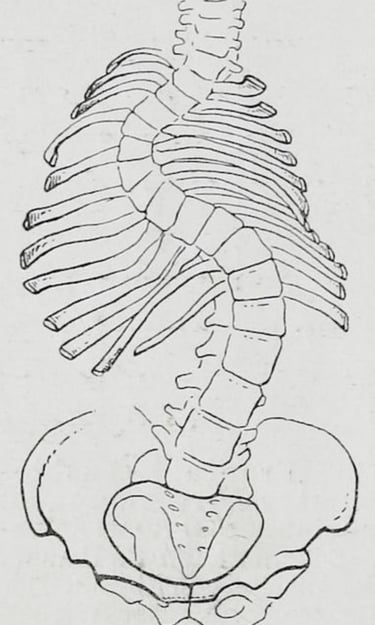
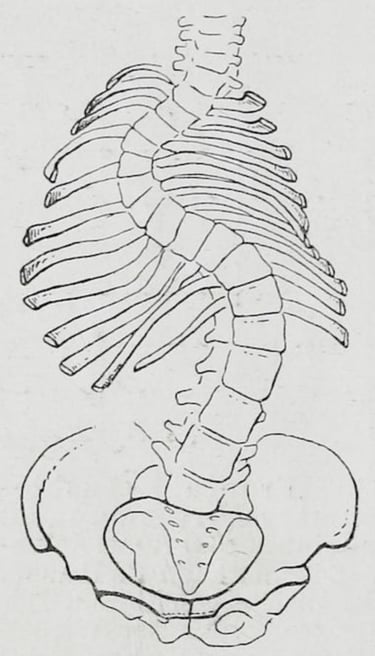
Figure 1. An anatomical illustration of scoliosis from the 1921. Braus, Hermann, via Wikimedia Commons
Anatomy of the spine
The vertebral column (spine), is made up of 33 vertebrae stacked on top of each other and divided into five regions:
Cervical spine (neck): made up of 7 vertebrae. They support the head and allow for a range of movement such as looking up, down, and side-to-side.
Thoracic spine (upper back): made up of 12 vertebrae which attaches to 12 pairs for ribs, forming the ribcage with the sternum (breastplate). The thoracic spine allows for rotation (twisting) of the trunk.
Lumbar spine (lower back): made up of 5 vertebrae and has the largest vertebral bodies for supporting the body’s weight. It allows for flexion (bending) and extension (straightening).
Sacrum: made up of 5 fused vertebrae and forms the base of the spine. It also attaches to the hip bones to form the pelvis.
Coccyx (tailbone): made of 4 fused vertebrae.
How Scoliosis Affects the Body
The spine is an integral part of the skeletal framework. It supports the body's weight, protects the spinal cord, and serves as a point of attachment for muscles and other skeletal structures.
As a result, spinal curvature and rotation leads to asymmetry in the musculoskeletal framework.
This presents as the signs we see in scoliosis.
Common signs of scoliosis
Rib prominence — one side of the rib cage may protrude more backward. This is seen clearly during the Adam’s forward bend test, a clinical test commonly used to assess scoliosis.
Uneven shoulders — one shoulder may sit higher than the other.
Uneven hips — one hip may appear higher than the other.
Why does a rib prominence occur in scoliosis?
Each vertebra has distinct anatomical features; a thoracic vertebra has features including a vertebral body, transverse process, articular facets, spinous process, and vertebral foramen. The ribs articulates with the thoracic vertebrae at two joints:
Costovertebral joint-where the head of the rib articulates with the vertebral body
Costotransverse joint- where the tubercle articulates with the transverse processes as shown below.
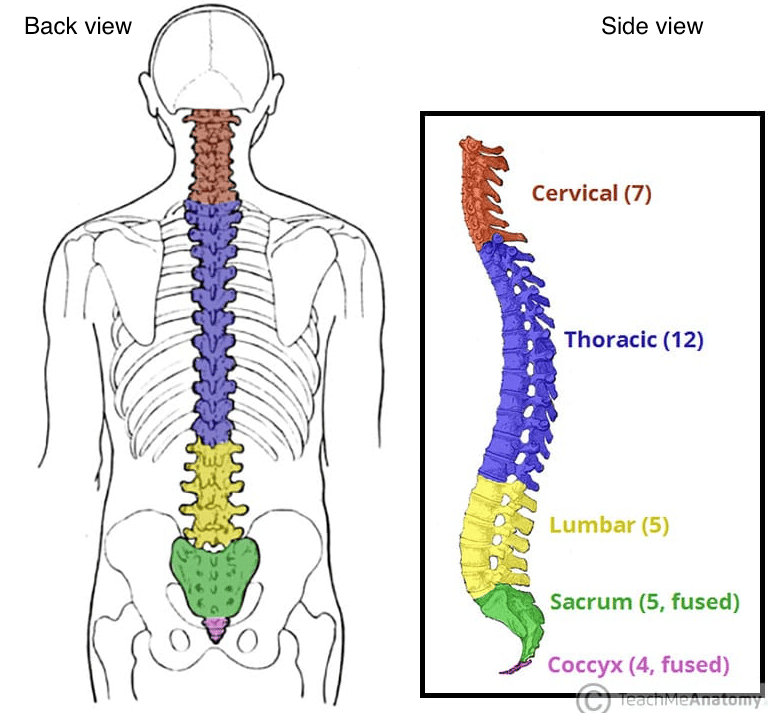
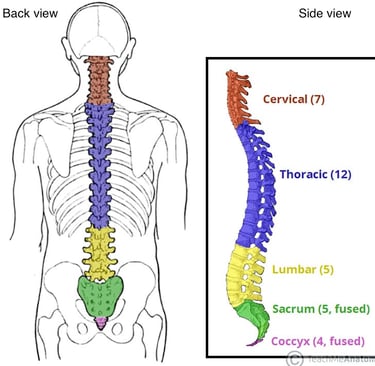
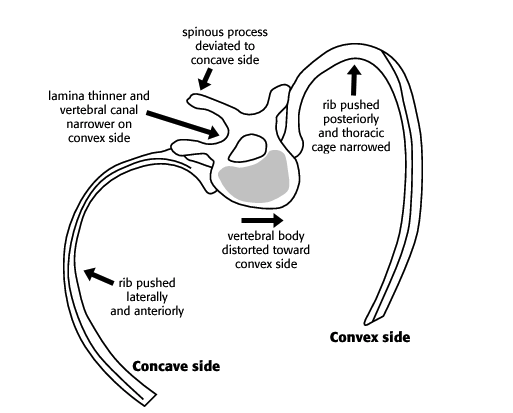
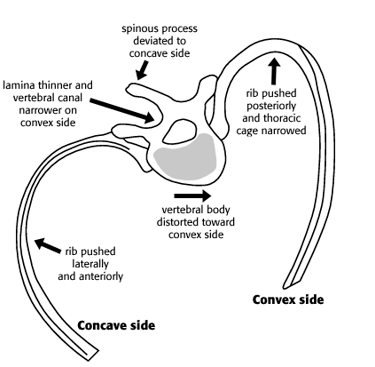
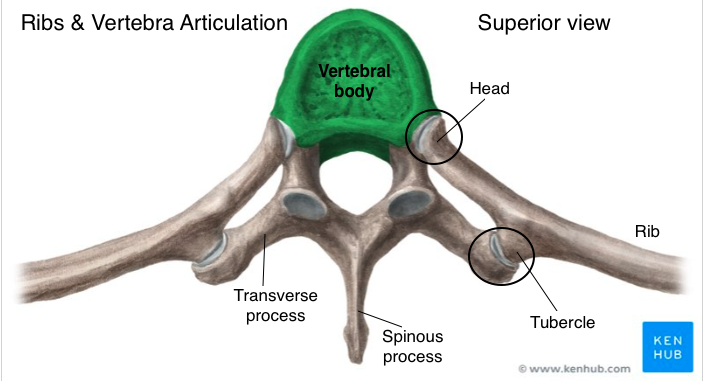
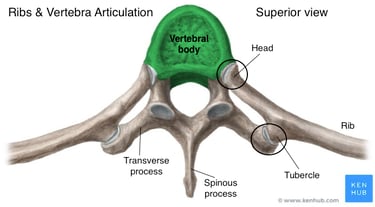
Figure 3. Articulation of the ribs on the thoracic vertebra as seen from above.
Figure 4. Vertebral rotation and rib displacement in thoracic scoliosis. Source: University of Washington
Connect
Contact
Subscribe
fusednotfragile@gmail.com
© 2025. All rights reserved.
Get updates on scoliosis, spinal fusion, fitness and stories